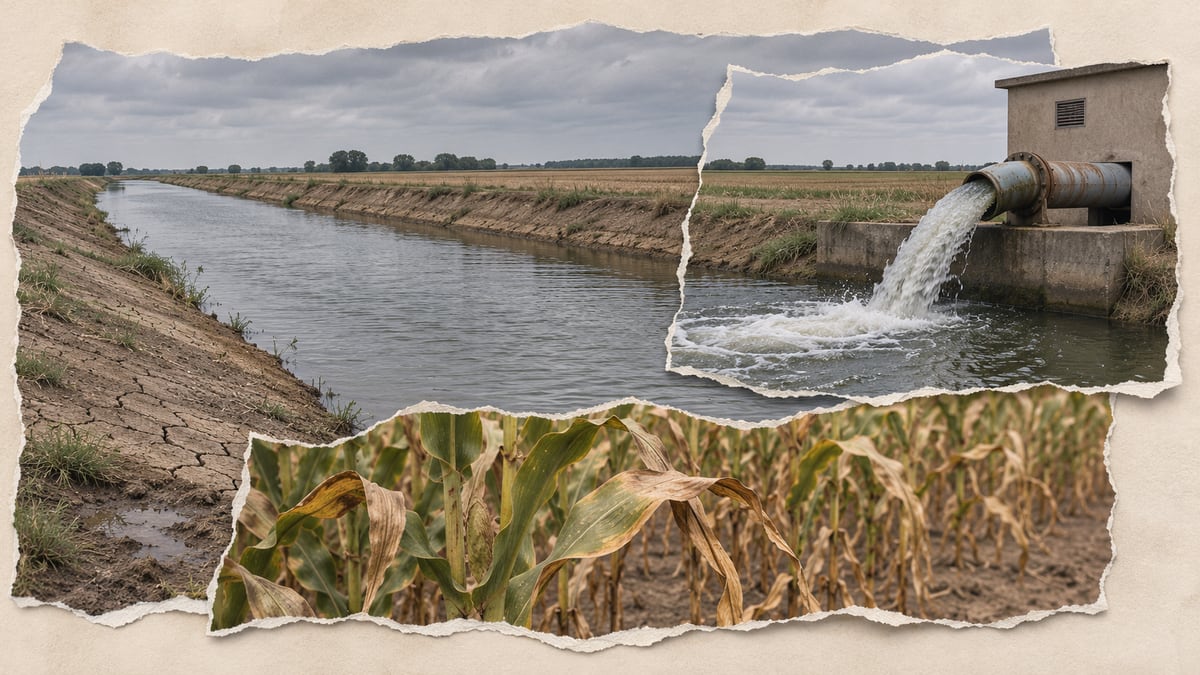
Because of a falling Danube water level and a drought lasting several months, an emergency was declared on the northern section of the Danube–Tisza–Danube (DTD) canal and irrigation from it was banned. The ban caused heavy losses for farmers in Vojvodina. Mobile pump units ran around the clock to prevent an ecological disaster. Only with the Bezdan pumping station started again and with recent rainfall is the lifting of the emergency measures coming into view.
The director of the public water company JVP Vode Vojvodine told RTV that the situation is gradually stabilising in most of the province, while northern Bačka remains in a critical zone. He said operating levels are in place in Southern Bačka and Banat, and that only northern Bačka is still below the minimum levels. He expects that during this week rainfall will add water collected by drainage through the canal network from lower-lying land across Vojvodina, and that operation of the pumping station will raise the level there so the system can return to regular operating regimes.
In Sombor, the ban on using the canal network in the most critical part of the season left severe consequences for crops. Vatroslav Drobilović, technical director of Meteor Komerc, told RTV that the Sombor company has 1,200 hectares with centre-pivot irrigation supplied about equally from wells and from the Veliki Bački canal. The crops it has grown for years in rotation are maize, wheat, sunflower, soya, beet and oilseed rape.
Drobilović said the ban took effect at the worst possible moment. He said dry spells have caused large damage to the company and to other farmers for the fifth year in a row. The ban came into force in the second half of July, when the plant needs the greatest amount of water so the grain can fill. He said average production on the parts left without irrigation from the Veliki Bački canal was 4.5 to 5 tonnes, while the parts irrigated from wells gave the yields they should for this year.