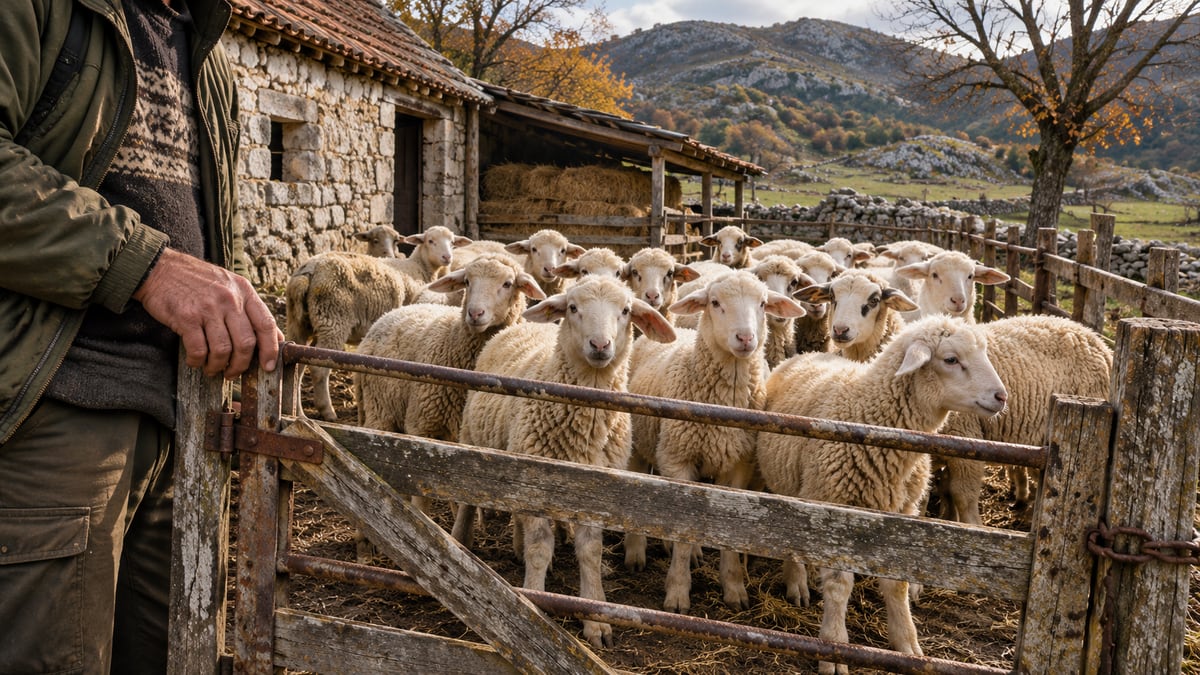
Livestock farmers in Montenegro are asking the state to buy another 6,000 lambs and expect the purchase deadline to be extended so a surplus can be cleared.
Slavko Mitrović, president of the Association of Livestock Farmers and Katun Residents of Montenegro, told Dan after a meeting with officials at the Ministry of Agriculture, Forestry and Water Management that the state will most likely decide to extend the buyout. The ministry told Dan the previous day that it could not yet confirm when that decision would be made.
Mitrović said a delegation of farmers from central Montenegro had been told that about 15,500 lambs had been purchased so far. Association representatives at the meeting asked the ministry, led by Vladimir Joković, to buy another 6,000 lambs, lifting this year’s purchase from the planned 17,200 to 21,500 head. While the buyout was being prepared, farmers reported 24,000 to 25,000 surplus lambs, but the decision taken was to purchase 17,200.
He said the minister called them to a meeting that morning and that they received promises the purchase deadline would be extended, including a promise that meat industries would extend it to 14 or 15 December. Otherwise, he said, farmers would have to do something. He added that farmers were assured the ministry would make an extra effort to place the surplus successfully.
The meeting also covered other difficulties for Montenegrin livestock farmers. Mitrović said the biggest was illegal lamb imports and unfair competition. Farmers told the minister that buyers, the meat industries, often purchase imported lambs instead of domestic ones because the price is lower. He said the association is working with the authorities to establish who is involved in illegal imports, and that some names have already been submitted. Some farmers who offered illegally imported lambs for purchase have already lost the right to premiums.
Mitrović said lambs from illegal imports come in the greatest numbers from neighbouring Serbia, and also from Bosnia and Herzegovina, specifically the territory of Republika Srpska, because lamb prices there are lower than in Montenegro. Over a problem that has lasted for years, farmers also point to the Ministry of Economic Development, which in their view has so far done almost nothing to stop illegal imports.
Milko Živković, president of the Union of Livestock Farmers of northern Montenegro, told Dan he is not optimistic that all of the reported surplus will be bought this year. He said the livelihood of many livestock farmers is in question because a drought lasting several months has left them without enough feed for their herds.