Serbia will be the guest-of-honour country at the Salon International de l'Agriculture (SIA) in Paris from 27 February to 7 March 2027. The fair is described as one of the most important European events devoted to agriculture and food production. The status is presented as a chance for Serbia to show French and international audiences its agricultural potential, traditional products, scientific institutes and modern technologies.
Preparations are already under way. At a working meeting in Paris on 17 November, organisational plans, new content and opportunities for international promotion were presented. Serbian representatives took part, and their participation was singled out during the presentation of the event's international programme.
A pavilion of about 300 square metres in hall 7.2 of Paris Expo Porte de Versailles is planned for Serbia's national presentation. Guest-of-honour status also brings special promotional opportunities that should increase the visibility of Serbian agriculture during the nine days of the fair.
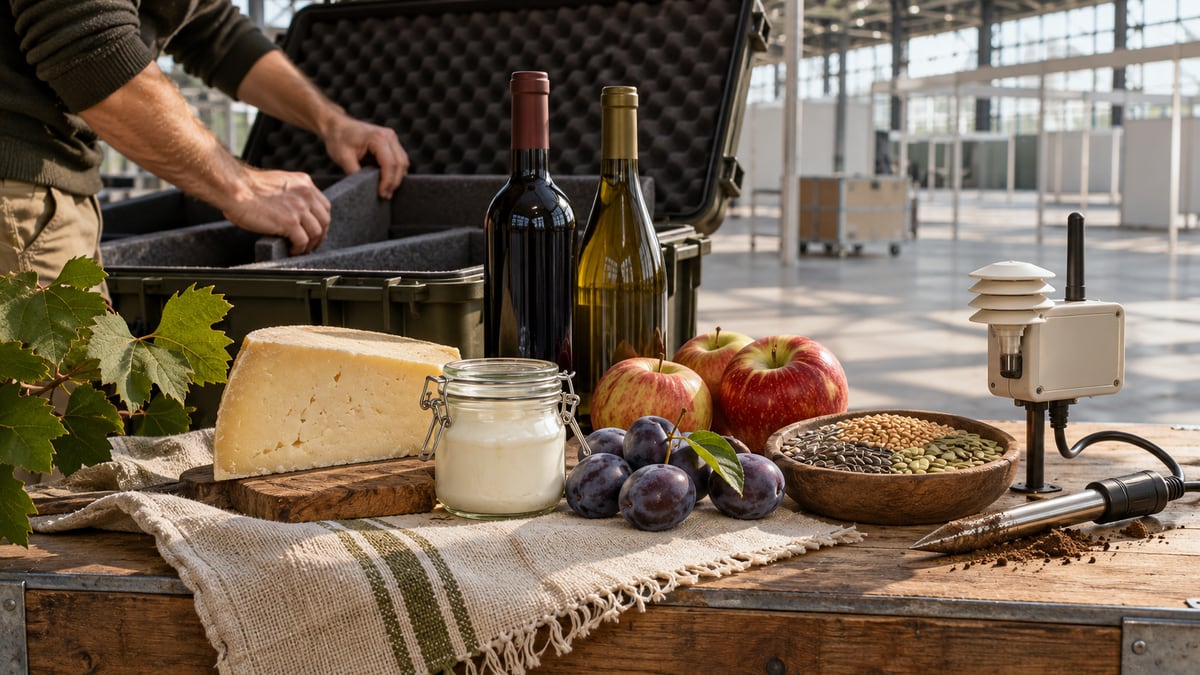
The Serbian presentation should combine what already makes the country's agriculture recognisable with what is described as its future. Alongside wines, cheeses, dairy products, fruit and other food specialities, a dedicated area could cover scientific achievements, seed production, digitalisation and artificial intelligence in agriculture. Particular attention is given to the possibility of showing technologies that link farming with robotics, digital systems and modern production management. That combination of tradition and innovation could be one of the main messages of the Serbian appearance in Paris.
At the November meeting, organisers stressed that the fair is a place for dialogue about the future of European agriculture as well as a showcase for animals and food. They pointed to challenges facing French farmers, from climate change to economic difficulties, and to the need for direct talks among producers, consumers and representatives of institutions.
The next edition falls in a French presidential-election year. A significant presence of political officials is expected, and the organisers are already preparing the schedule of their visits. The report describes this as a further opportunity for Serbia to present possible cooperation with French institutions and companies through the national pavilion, specialist meetings and business encounters.
Organisers also stressed international partnerships, saying the fair should be a place where contacts are established and cooperation continues after the event.
Visitors are due to see major changes. After an absence of several years, the poultry sector is returning, and cows, which traditionally attract strong public interest, will be shown again. The breed in focus is the Ferrandaise, an indigenous French cattle breed from the Auvergne region. The public face of the next fair will be the cow Séraphine, introduced ahead of the November meeting. Visitors will also be able to see horses, sheep and other domestic animals, with special programmes for children and families.
The organisers have an ambitious goal of bringing back about 170,000 visitors who stayed away the previous year. Reconstruction of the Paris exhibition complex adds organisational challenges. The works will affect the layout of pavilions during 2027 and 2028, while full use of the renovated capacity is expected in 2029.
A major part of the next fair will be the professional programme SIA'PRO, intended for business meetings, conferences, workshops and the exchange of experience. For Serbia, the report presents this as a chance to use the national appearance for talks on exports, investment, technology transfer and scientific cooperation, beyond tastings and product displays.
Organisers have announced stronger digital promotion of exhibitors' programmes, including conferences and other events through the fair's official communication channels. For Serbian participants, timely preparation of the programme is described as equally important as the appearance of the national pavilion. Media presentation is given particular weight because, as guest of honour, Serbia would have a chance to reach an audience far larger than the number of people visiting the exhibition space.
The Paris fair is described as a rare opportunity to promote Serbian agriculture on the French and wider European market. France is characterised as one of Europe's leading agricultural powers, with a strong food industry, a developed scientific-research system and a large influence on European agricultural policy. Guest-of-honour status is therefore presented as more significant than ordinary participation in an international fair.
The appearance is framed as a chance for Serbia to show what it produces and also what it knows, which technologies it develops and what cooperation it can offer. The report says success will be judged by business contacts, interest in domestic products, media visibility and partnerships continued after the fair, as well as by the number of visitors to the Serbian pavilion.
From 27 February to 7 March 2027, Paris is described as one of the most important addresses of world agriculture, with Serbia able to present itself there as a country of rich farming tradition, quality food and contemporary ideas.