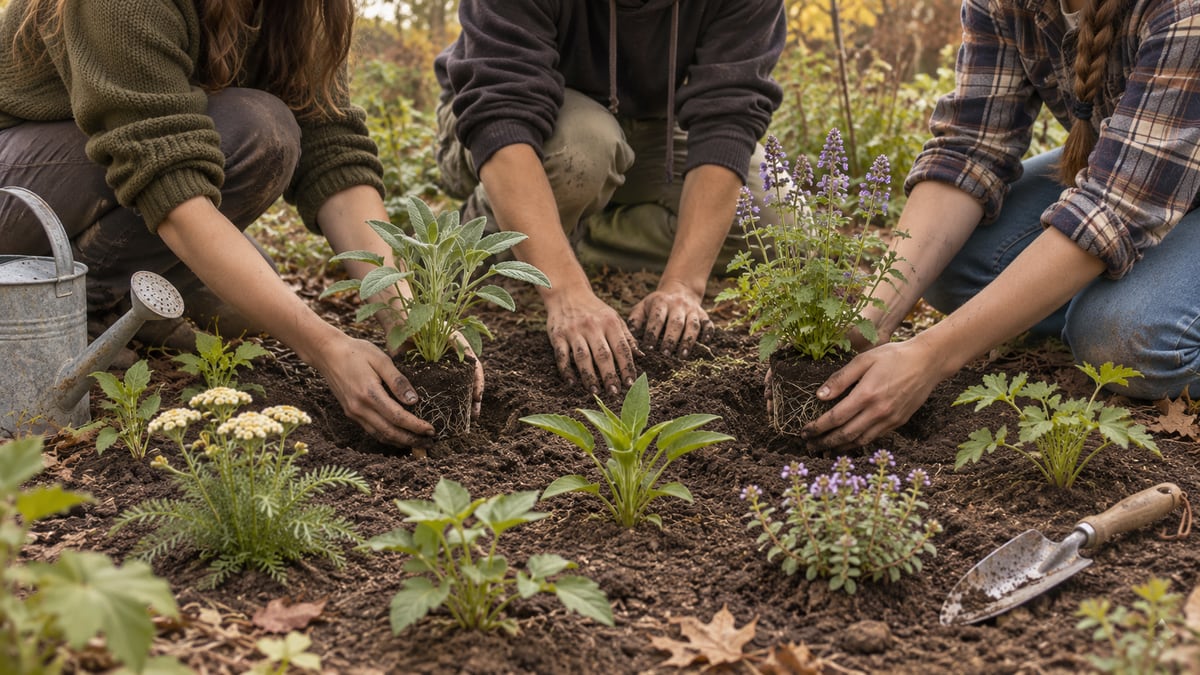
Second- and third-year students took part in forming pollinator oases meant to preserve biodiversity, attract different pollinator species and introduce young people to the principles of regenerative agriculture.
The workshop was intended to familiarise the students with sustainable methods of agricultural production and the importance of environmental protection. Its message was that care for the soil is an investment in the future of agriculture.
The project mentors are the women professors Magdalena Gak and Sandra Karišić. The organisers are the Gorani Movement of Kikinda and Young Researchers of Serbia.
Sandra Karišić, a vocational-subject professor at the Secondary Agricultural School, said the students had the chance to plant 12 different species of honey plants and to form a pollinator oasis. She said its large future aim is to maintain biodiversity in the surrounding area, attract pollinators such as bees, butterflies and bumblebees, and place the emphasis on conserving them. She added that the aim is also for the basic principles of regenerative agriculture to take hold in the classroom.
Karišić said that, thanks to the project, young people can learn how important biodiversity conservation is for the environment and for the future of agriculture. She stressed that, in the present time, when climate change threatens everyone, these pollinator oases can help people successfully get through that large problem.
The agricultural school has a tradition of seven decades. The Secondary Agricultural School was founded in 1956 in Ečka and was moved to Zrenjanin in 1968.
The school has general-purpose classrooms, specialised classrooms, subject rooms, a library, a physical-education hall and an outdoor sports ground. Practical teaching uses the school farm, a greenhouse, workshops, agricultural machinery and other equipment.
As confirmation of the high level of education it has provided, the school also notes that citizens of Asian and African countries once attended.