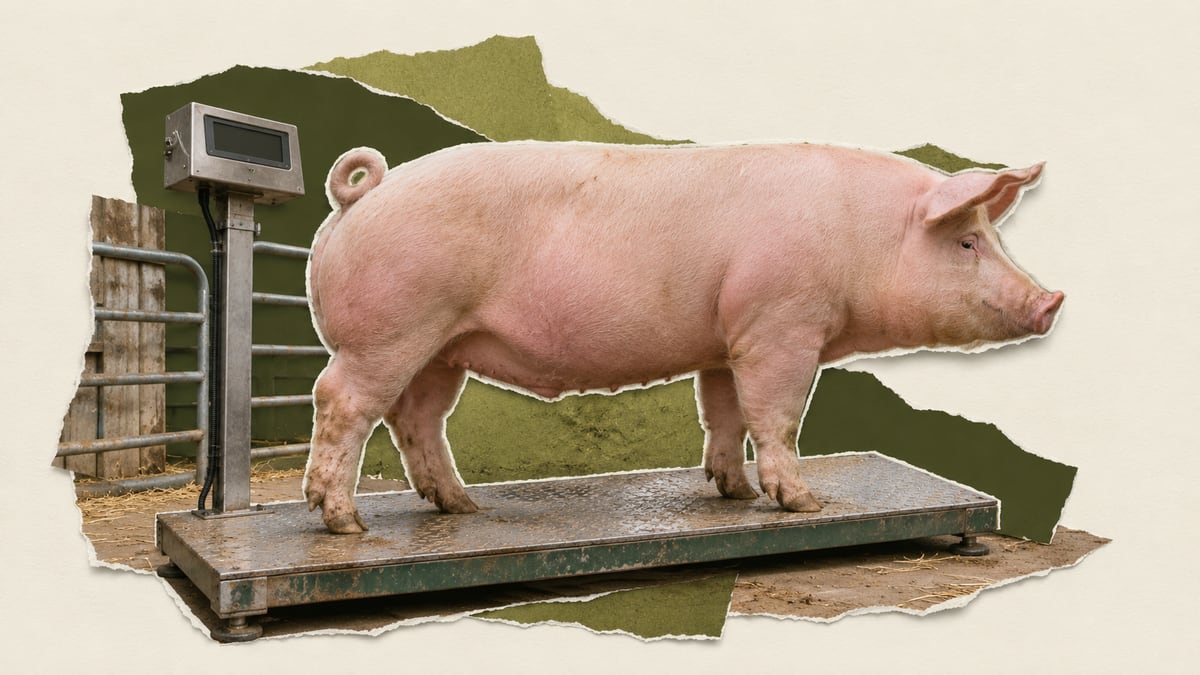
Belgrade slaughterhouses most often paid 270 dinars per kilogram of live weight for fattening pigs of 80 to 120 kilograms at the end of October 2026. In the next observation, at the beginning of November, that dominant price fell to 210 dinars, a drop of about 22 percent, or 60 dinars per kilogram. It was still 210 dinars in mid-November. During the week of the fall, reporters for the Market Information System of Agriculture of Serbia (STIPS) rated supply as good and the number of animals purchased as average.
The figures come from three consecutive STIPS bulletins covering 26 October to 15 November 2026. Livestock purchases were tracked at slaughterhouses in the Belgrade area, while chicken prices were recorded at two green markets.
For a producer delivering a 110-kilogram fattening pig, the gap between the two prices is 6,600 dinars per animal. At 270 dinars per kilogram the animal was worth 29,700 dinars; at 210 dinars it was worth 23,100 dinars.
At the end of October the Belgrade price stood above the price in some neighbouring districts. Slaughterhouses in the South Banat district and in the Podunavlje district most often paid 220 dinars for the same category. In mid-November 220 dinars still dominated in both districts, ten dinars more than in Belgrade.
For Simmental fattening bulls heavier than 500 kilograms, the dominant purchase price in Belgrade and the surrounding area was 440 dinars per kilogram of live weight in all three observations. The latest bulletin said that, compared with the previous week, neither the volume of supply nor the number of animals purchased had changed significantly. In that latest observation the same category brought 450 dinars in the Loznica area, 460 dinars in the Podunavlje district and 480 dinars in the Nišava district. The bulletins do not track where animals arriving at Belgrade slaughterhouses come from.
Belgrade slaughterhouses had published prices for only two categories, fattening bulls and fattening pigs of 80 to 120 kilograms. There are no comparable local prices for piglets, lambs, calves, sheep and other categories. Empty fields in the tables mean a price was not published.
Neighbouring districts offer a reference. In all three observations, slaughterhouses in the Podunavlje district most often paid 360 dinars for piglets of 16 to 25 kilograms and 450 dinars per kilogram of live weight for lambs. In the Braničevo district the dominant lamb price was 500 dinars each time. At the livestock market in Smederevo, piglets of the same weight cost 400 dinars and lambs 500 dinars per kilogram throughout the period.
The dominant price of chicken meat was 450 dinars per kilogram at Kalenić market and 300 dinars at Skadarlija in all three observations, a gap of 150 dinars that did not change. Two kilograms would have cost 900 dinars at Kalenić and 600 dinars at Skadarlija. Chicken is the only meat for which these bulletins publish retail prices at Belgrade markets. Pork, beef and lamb sold in butcher shops and supermarkets would require separate retail figures. A live-weight purchase price shows what the breeder receives. The shelf price also depends on how much meat is obtained after slaughter, the type of cut, and processing and selling costs.
The clearest reading of supply and demand in Belgrade concerns fattening pigs: the price fell at the start of November in a week when supply was good and purchases were average. For fattening bulls in mid-month, both the price and the volume of purchases stayed at the previous week's level. The bulletins record stable chicken prices at the two markets. They do not publish quantities sold or how well the whole city was supplied.
The data are from STIPS bulletins on livestock, cereals and animal feed, issues 44, 45 and 46 of 2026. The article was produced within a project on who feeds Belgrade and the path of food from producer to the city table, co-financed by the City of Belgrade Secretariat for Information. The views in the text do not necessarily reflect those of the body that awarded the funds.