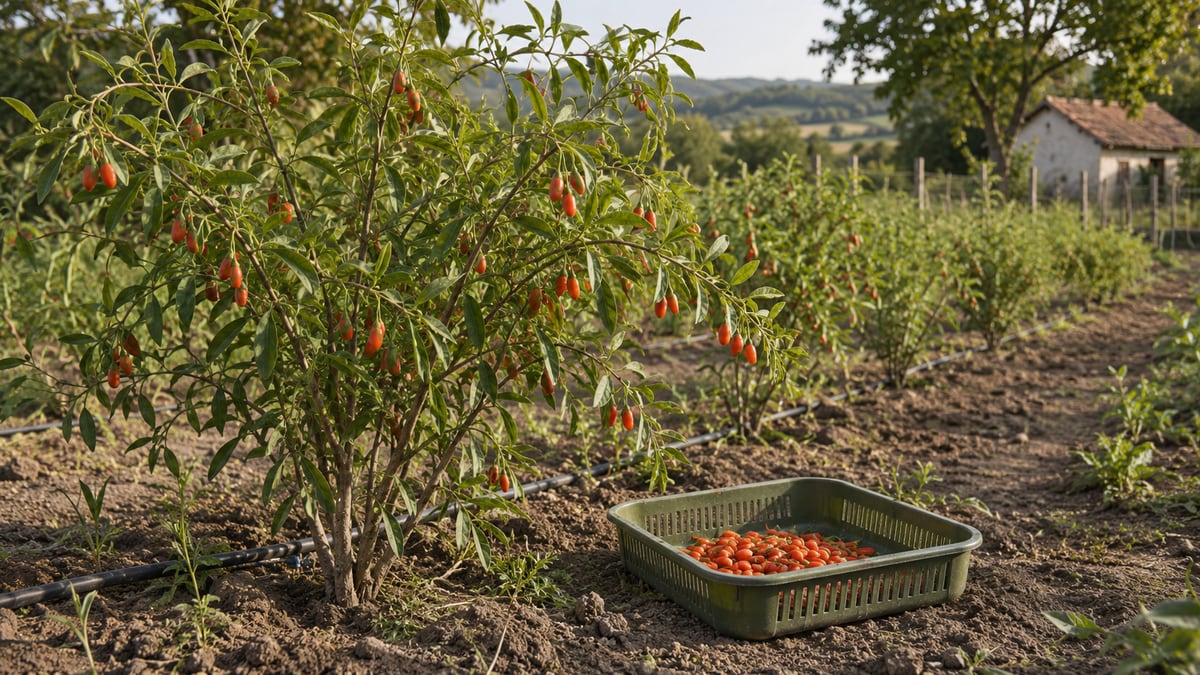
Goji berries come from China, from the southern areas of Tibet, at an altitude of three thousand metres. Over the past fifteen years they have spread to every continent and have also reached Serbia. The planting filmed for the report is in Irig and covers one hectare. The planting material was obtained from Bulgaria, where Chinese producers raise seedlings.
Grower Stevan Martić said that experts from China and the European Union work there on the genetic production of planting material, and that, as could be seen, plant establishment was one hundred percent.
Goji can grow as high as five metres. Because of picking, farmers keep the perennial bushy plant at up to two metres. Specialists at the Faculty of Agriculture say goji is a very hardy species, while questioning how profitable production is.
Professor Nenad Magazin of the Faculty of Agriculture said production can be profitable only with a complete business plan, meaning that finished products are sold. He said the Chinese have huge goji plantations, dry the fruit and export it, and that Serbian growers cannot compete with them.
The goji fruit is extremely small and soft, so the harvest requires trained labour. Local growers sell goji as a raw material and also as juices and teas. Martić said it is also sold frozen and that the fruit can last up to one year in a refrigerator.
Serbia has no official figure for the total area under goji berries because the crop is not recorded separately. The Statistical Office of the Republic and the Ministry of Agriculture place it in the general category of other strawberry and berry fruit.