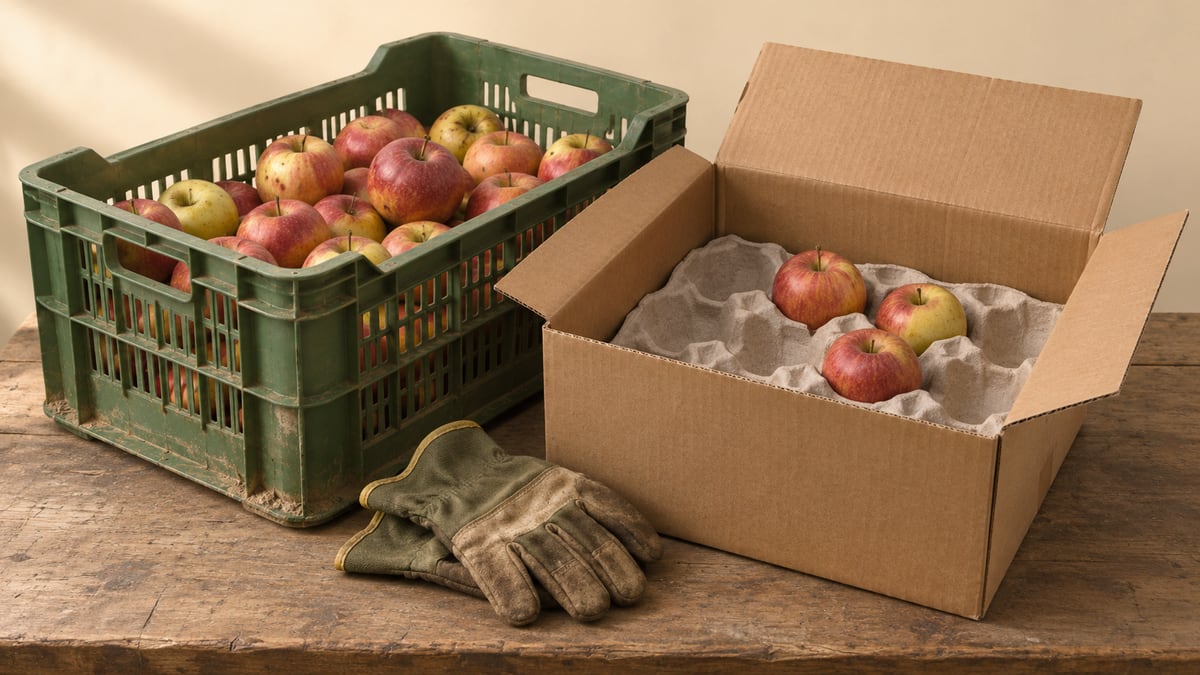
Seasonal work in Serbia continues through November. Jobs remain in warehouses, storage sites and plants that sort and pack fruit and vegetables, while some areas still have work tied to late crops and preparing produce for storage, Biz portal reports.
For people seeking extra income, seasonal jobs can be a way to earn, though the daily rate depends on the type of work, the place of employment and the length of the working day.
Unlike the summer months, when demand for fruit and vegetable pickers is highest, part of the work in November moves from the fields into warehouses and facilities for processing and distribution. The roles most often sought are sorting and packing fruit and vegetables, preparing goods for sale, loading and unloading, and work in warehouses and cold stores.
In some farming areas, jobs linked to the late harvest, soil preparation, orchard maintenance and other tasks that depend on the crop and the weather can also be current. Demand for such workers in November is shown by an advertisement published this month for warehouse staff sorting fruit and vegetables in Kać, near Novi Sad.
A daily wage can reach 5,000 dinars. In September, when demand for workers was higher because of the grape, apple and vegetable harvests, daily rates of about 5,000 dinars were offered in some parts of Serbia. Around Topola, a daily rate of about 5,000 dinars was mentioned for the grape harvest, while in the Vlasotince area hourly rates of 500 to 600 dinars were offered for some jobs. For workers hired for 20 working days at a daily rate of 4,000 to 5,000 dinars, that would mean earnings of 80,000 to 100,000 dinars.
A shortage of labour is one of the longer-running problems of domestic agriculture. Producers are finding it increasingly difficult to recruit enough people for tasks that require a large number of workers in a short period. On average, about 30,000 seasonal workers register each year, with the largest number of engagements recorded in June, July and August. One reason producers struggle to find workers is the physically demanding nature of the work, along with the fact that employment is often limited in time and depends on the weather and the length of the harvest.
Employers in agriculture can now register a worker electronically. Registration matters for workers because it secures insurance rights under the rules governing this form of employment, including insurance in case of injury at work. Although the procedure has been simplified, the labour shortage remains a serious challenge for farmers, especially when a large number of jobs must be finished in a short time.